
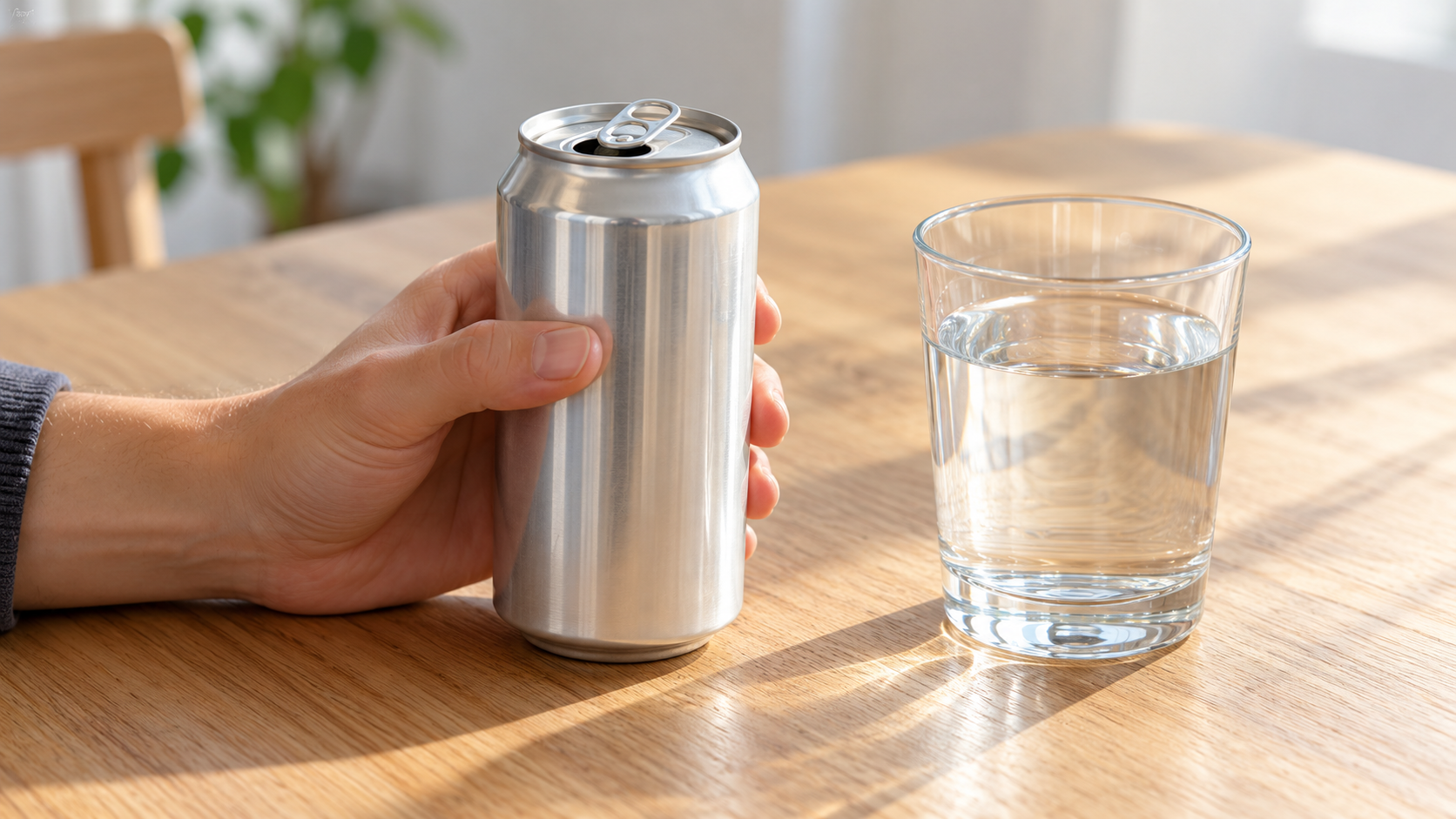
06-kaufen-hero

Buying Hydrogen Water: 7 Criteria for Good Quality

Buying hydrogen water: what to look for? 7 criteria, from ppm figures and measurement to packaging and transparency, plus a checklist for comparing.

Published on October 31, 2026

If you want to buy hydrogen water, you quickly face a confusing market: cans, bottles, pouches, tablets, devices, plus ppm figures that are hard to compare. Consumer portals such as Barmer and Utopia consider the benefit unproven. That is one more reason to look closely at quality: if someone is spending money on a product whose special feature is a dissolved gas, it should at least be clear whether that gas actually ends up in the glass.

This guide is deliberately neutral. It explains seven criteria that apply to any hydrogen water, whatever the brand, and ends with a checklist you can use when comparing.

Short answer: how do you recognize good hydrogen water?

Good hydrogen water states its concentration clearly and says when that figure applies (at filling or until expiry). It discloses how and where it was measured, has a best-before date that suits the packaging, and comes in a gas-tight container with a reliable closure. It also has a clear ingredient list without additives, a traceable origin, and a provider that does not hide test reports, contact details or returns. If one of these details is missing, that is not proof of poor quality, but it is a reason to ask.

Why quality is not a given with a dissolved gas

Hydrogen is the smallest and lightest molecule there is. Only a small amount dissolves in water, and it escapes easily once the pressure drops, the temperature rises or the container is not tight. Unlike minerals, which stay in the water, the content can therefore change after filling.

That is why it is not only what a manufacturer puts into the package that counts, but also what is left after transport, storage and opening. On top of that, there is no legally defined labeling for hydrogen water, and we found no independent test of ready-to-drink hydrogen water in our research. When buying, you therefore depend more on the provider's transparency than with many other drinks.

Criteria 1 to 3: concentration, measurement, timing

ppm figure: at filling or at expiry?

Concentration is usually given in ppm, where 1 ppm in water roughly corresponds to 1 mg per liter. What matters is what the number refers to. A value "at filling" says little about what arrives after several months on the shelf. A value "at the end of shelf life" is far more meaningful. Reliable statements give both, or at least the reference point.

For orientation: according to manufacturer manuals, at normal pressure and 25 °C at most about 1.6 mg of hydrogen dissolves per liter of water. This is a manufacturer statement, not an independent source, but it fits with standard physics. Higher values require filling under pressure and must then be especially well documented. Anyone who simply promises "as many ppm as possible" without naming the time of measurement provides no comparable information.

How and where is it measured?

The second question is about the method. Laboratories use gas chromatography or special electrodes, for example, while in everyday use titration drops are often used, which only give rough guide values. Ask: who measured, with which method, on which batch, how often? A test report from an external lab is more meaningful than a sentence on a website. If it is missing, "measurement" is just a claim.

Best-before date and H₂ loss

The third criterion is the best-before date. With hydrogen water, it is not only about microbiological freshness but about how long the gas stays in the container. A long shelf life with no statement about the concentration at the end is worth less than a shorter one with a traceable measured value. Only the manufacturer can give you concrete monthly loss rates based on its own data; we found no documented general figures and therefore do not state any.

Criteria 4 to 5: packaging and closure

AWAKE Blog Bild

Barrier material and closure

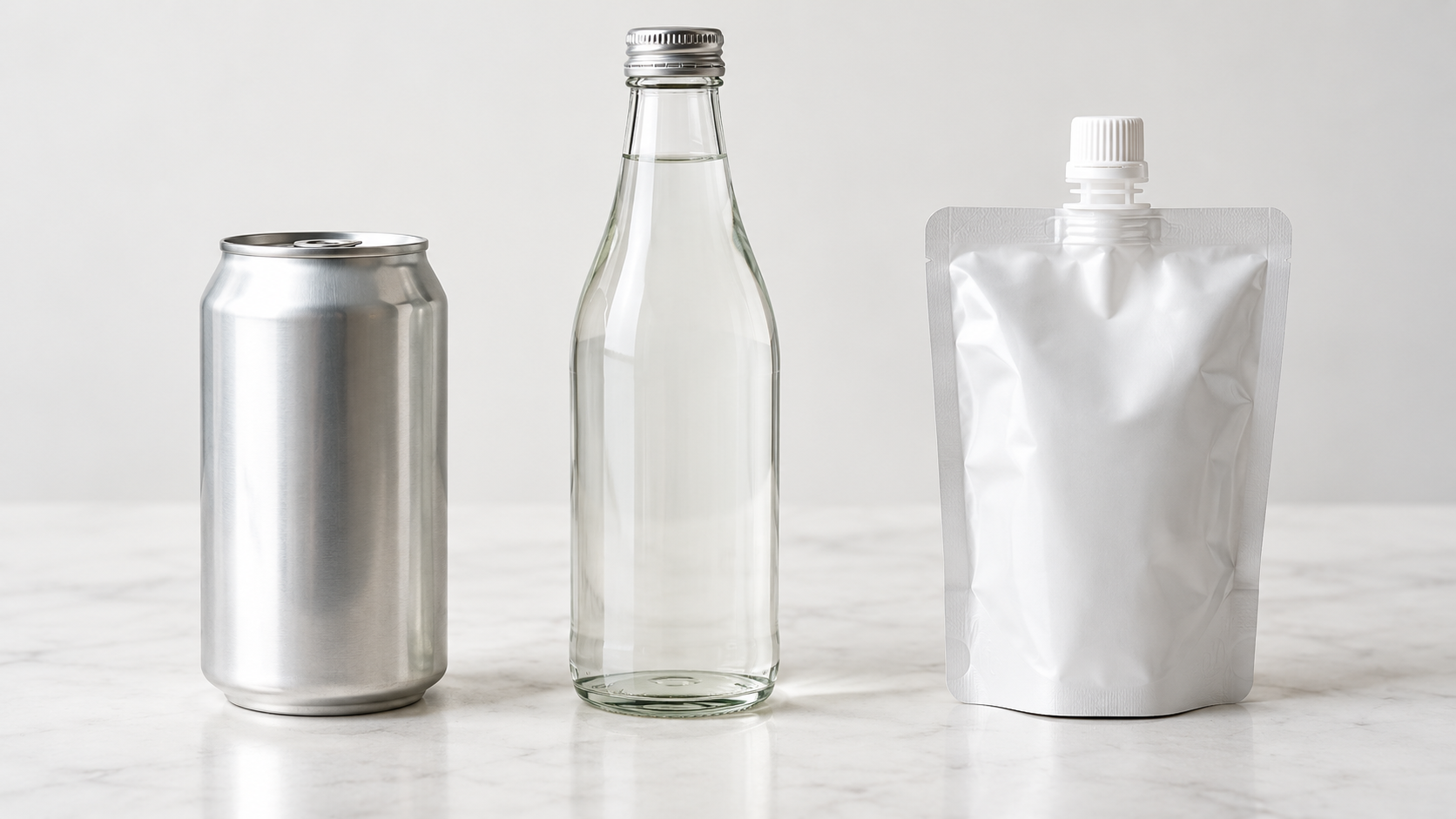
What matters is how gas-tight the container is. Aluminum and glass are considered good barriers because they let practically no gas through. Plastic bottles are generally more permeable to such a small molecule. With pouches, a lot depends on the multilayer structure and the spout; the patent literature describes the closure as a weak point. These are manufacturer statements and not independent comparison tests, but they help with putting things in context.

Often it is not the material but the closure where gas is lost: screw caps, seals and spouts are the typical weak points. A can with a pull tab or a glass bottle with a crown-cap-like closure behaves differently here than a resealable pouch.

Open once, drink promptly

The fifth criterion concerns you as the user: as soon as the container is open, gas loss begins. Packaging filled in small units and meant to be opened once therefore suits better than a large bottle you open again and again over several days. According to a small study with five participants, uptake itself is quick: Shimouchi et al. (2009) measured briefly elevated hydrogen levels in exhaled breath after drinking, which then dropped again. That is no more than an illustration of "in quickly, out quickly"; the sample is very small.

Criteria 6 to 7: ingredients and transparency

Pure water without additives, origin

At its core, hydrogen water should be water with a dissolved gas. Look for a short ingredient list. Additives such as flavorings, sweeteners or mineral blends are not automatically bad, but they change what you are actually buying. The origin of the water and the place of filling should also be stated. For products from Germany, you can also trace which food law requirements apply to filling.

Test reports, contact, returns

The seventh criterion concerns the provider. A reputable seller has a complete legal notice (imprint), a reachable way to get in touch, clear withdrawal and return terms, and answers questions about measured values factually. The usual consumer rights apply to online purchases, with limits for food: opened or sealed goods that are not suitable for return are often excluded from withdrawal. Read the terms before buying. If you choose a trial pack, you can get your bearings on a small scale before a larger purchase.

Checklist for comparing

Criterion Good answer Warning sign
ppm figure Value plus reference point (filling or expiry) Only "highly concentrated" or "up to" without proof
Measurement Method and lab named, report available No information on the method
Shelf life Best-before date fits the packaging, end value known Long best-before date with no statement on H₂ content
Packaging Gas-tight material (e.g. aluminum, glass) Thin plastic without a barrier
Closure Designed for single opening Large container that stays open for days
Ingredients Water, any mineralization openly stated Unclear additives, no origin
Provider Imprint, contact, returns, factual answers Healing claims, pressure, unclear terms

All three AWAKE variants, the can (30 × 250 ml), the glass bottle (24 × 330 ml) and the squeeze pouch, can be checked against this list. You should ask the provider directly for the relevant measured values and test reports, just as you would with any other product. You can find more in our product comparison.

Here is how to proceed in practice: place two or three products side by side and note which details you find and which are missing. For open points, send the provider a short message with specific questions, for example about the measurement method and the value at the end of shelf life. How quickly and how precisely they answer often says more about a provider's quality than any advertising claim. And do not forget the price per liter: it helps with comparison, but does not replace any of the seven criteria.

AWAKE Blog Bild

What hydrogen water cannot do

An honest assessment includes this: hydrogen water is not a medicine and no substitute for water, sleep, exercise or a balanced diet. Research on molecular hydrogen is lively, but mostly still young. Many human studies have small samples, short durations and different protocols, and some are funded by parties close to the industry. Meta-analyses, such as the one on exercise in Frontiers in Nutrition (2024), summarize 27 publications with 597 participants and observe indications of lower perceived exertion and lower lactate levels. However, they include molecular hydrogen in general, not only drinking water, and leave questions about dose and duration open. You will find an overview of studies on our page about hydrogen water studies.

So if you buy, look not for promises but for traceable quality, and see the product as a complement to a healthy daily routine.

Frequently asked questions

How many ppm should hydrogen water have? There is no official recommendation. What matters is that the figure is documented and refers to a clear point in time. More in our article on H₂ concentration.

Is a can or glass better? Both are considered good barriers. More important than the material alone are the closure and whether the manufacturer publishes measured values for it.

Can I check the concentration myself? Only roughly, for example with titration drops. Reliable values require laboratory methods.

How do I spot a rip-off? By healing claims, a missing imprint, unclear prices and measured values without a source.

Is a trial pack enough to try it out? It helps you get to know the taste and handling. Whether you "feel" an effect is individual and not proof of quality.

This article is for general information and does not replace medical advice. It contains no healing claims.

Further reading: Hydrogen water compared · Hydrogen water: studies at a glance · Is hydrogen water healthy? Effects, experiences, criticism