
You can make hydrogen water at home, at least to a certain extent. Marketplaces offer tablets for a few euros, generator bottles from around 25 to 40 euros, and devices that cost well over 400 euros. The price range in our research is wide, and so are the claims about the concentration they reach. This article explains how the methods work, what they can do, and where their limits lie. It is meant to be neutral: making it yourself is a legitimate option that can make sense depending on your expectations.
Making Hydrogen Water Yourself: Methods Compared
Making hydrogen water yourself: tablets, generator bottles and filters compared, covering the physics, costs, limits and safety notes for home use.
Published on October 31, 2026
Short answer: Can you do it at home, and what is the difference?
Yes, with tablets, electrolysis bottles or filters with a special cartridge, you can enrich water with hydrogen at home. Compared with ready-to-drink water, the difference comes down mainly to three points: the amount reached varies more, you can hardly measure it reliably, and you have to drink the water right away because the gas escapes quickly. Ready-to-drink water in cans or bottles is filled under controlled conditions, but it usually costs more per serving.
Physics in three paragraphs: How does H₂ get into water?
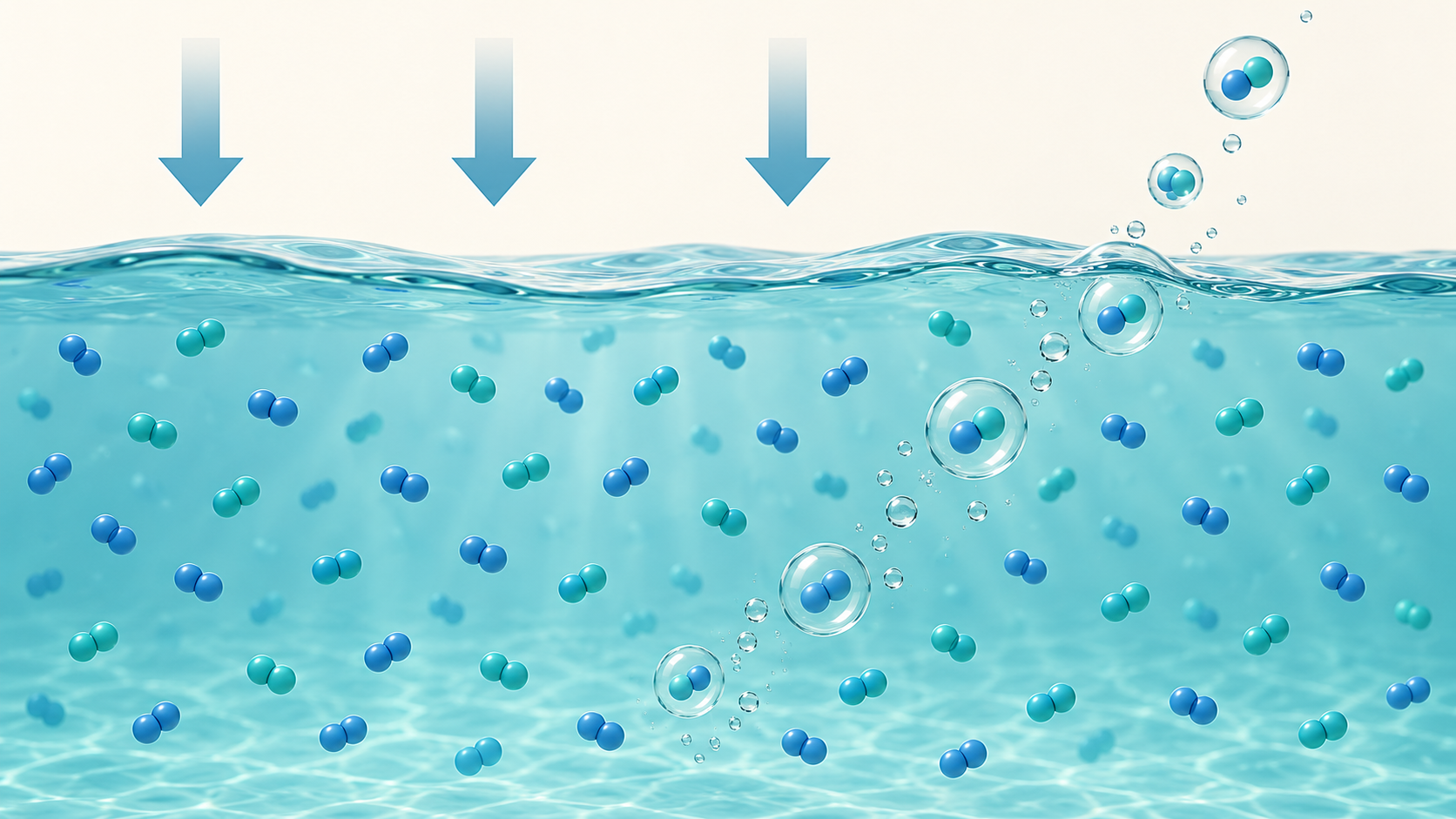
Hydrogen is a gas that dissolves poorly in water. According to manufacturer manuals, at 25 °C and normal air pressure it is about 1.6 mg per liter. That corresponds to roughly 1.6 ppm. This is a manufacturer figure, not an independent measurement, but it matches the order of magnitude found in the literature. You can only get more by introducing the gas under pressure.
The second point is escape. Hydrogen molecules are tiny and diffuse even through many plastics. As soon as you fill a glass or open a bottle, the content drops, quickly at first, then more slowly. Warmth speeds up the loss, and so does shaking.
Third, this means that all home methods have to supply the gas at the moment of drinking, because storage hardly works. This is the real difference between freshly made and bottled water.
What does this mean in practice? Two things. First, the achievable amount is physically limited, so promises of very high values in an open glass should be read with skepticism. Second, time matters more than with almost any other drink: there should be minutes between preparation and the first sip, not hours. This applies equally to tablets, devices and filters, and it is one reason why many manufacturers of ready-to-drink water rely on gas-tight single-serve packaging.
Method 1: Tablets (magnesium reaction)
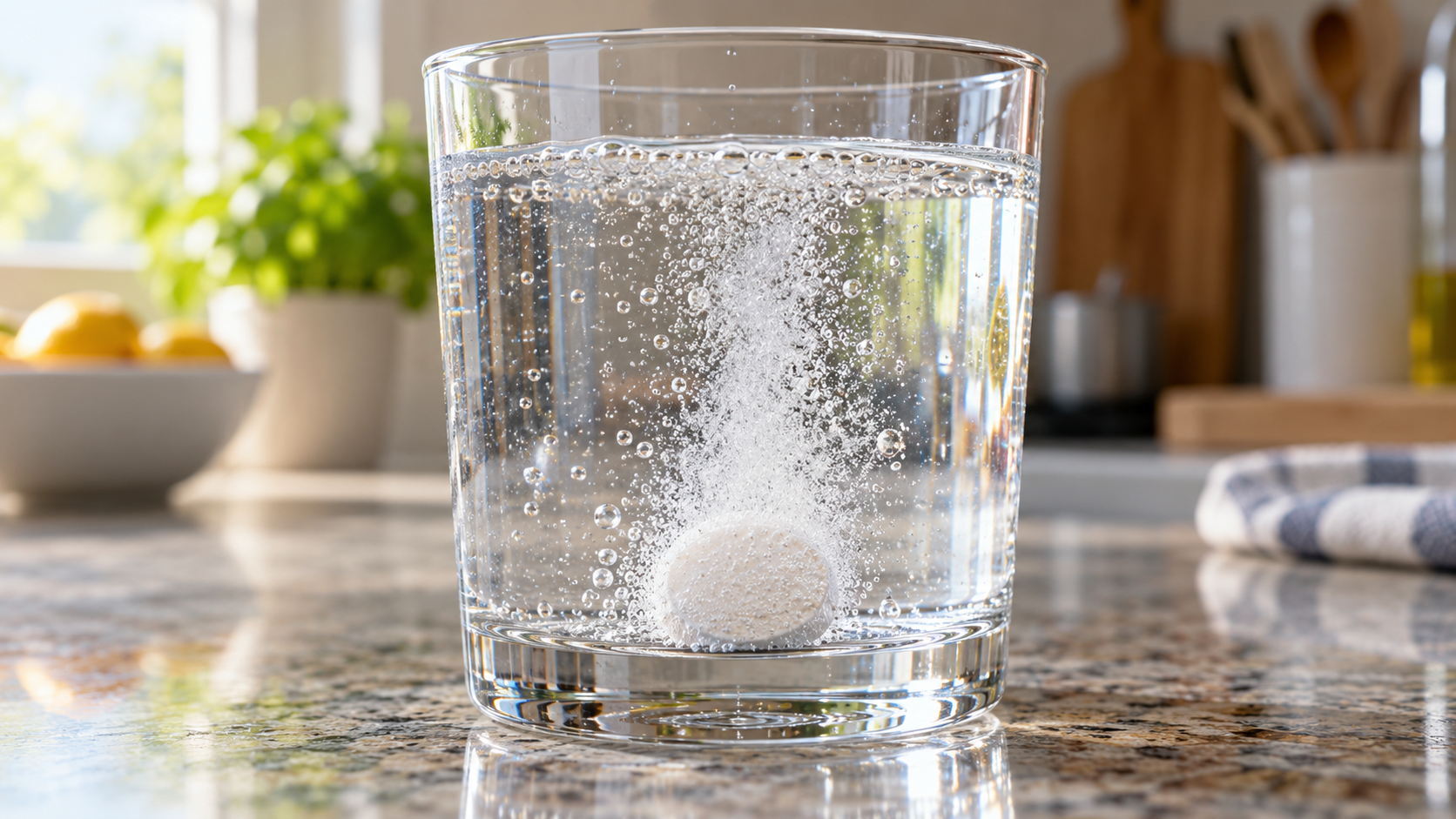
Most tablets contain metallic magnesium, which reacts with water. This produces hydrogen, along with magnesium hydroxide and, depending on the formula, additives such as acids or salts. The tablet dissolves with fizzing, and you drink the glass promptly.
Advantages: Tablets are inexpensive, light and handy on the go. The barrier to getting started is low.
Limits: The amount of dissolved gas depends on water temperature, hardness, the shape of the glass and stirring time, so it is hard to reproduce. The reaction leaves residues that show up as cloudiness or sediment, and magnesium ends up in the drink, which can be noticeable in taste and, for some people, in the stomach. Ingredient lists differ widely, so read them carefully. We found no reliable studies on the effectiveness of tablets that we could cite here. There are mainly individual case reports and press releases from manufacturers. How tablets and ready-to-drink water differ in everyday use is covered in our own comparison.
Method 2: Electrolysis bottles and generators
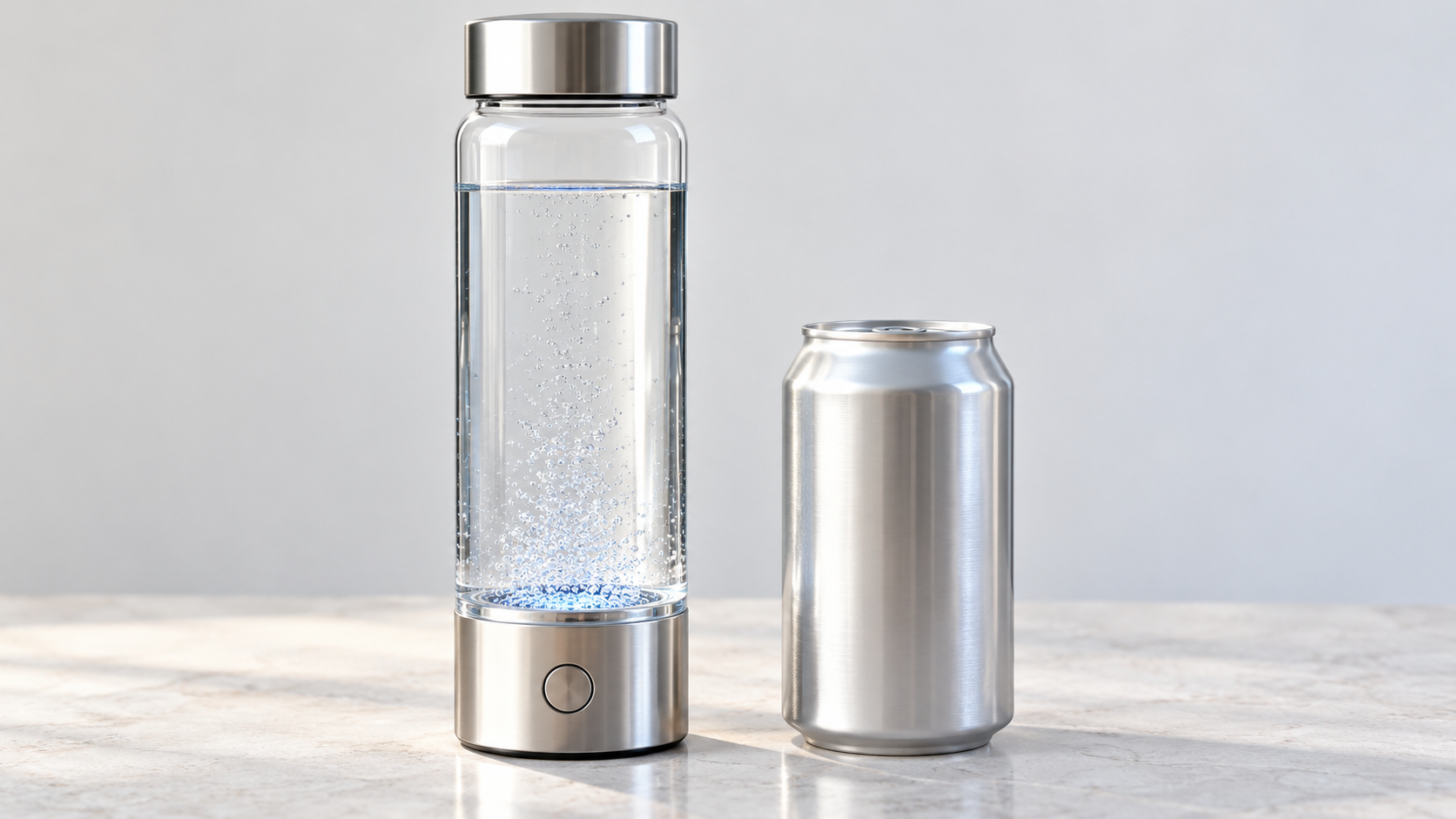
Electrolysis bottles split water into hydrogen and oxygen using electricity. A membrane is supposed to separate the two gases so that hydrogen enters the drinking water while the oxygen (or by-products) is vented. Simple devices bubble the gas into the glass, while more elaborate ones work with pressure and compression.
Advantages: You can prepare it fresh at any time and do not need disposable tablets. Good devices with a membrane produce little by-product.
Limits: Quality varies enormously. Cheaper devices without a proper membrane can leave by-products in the water; manufacturers describe this differently in their tests, and we lack an independent market overview. Electrodes build up limescale, membranes age, and cleaning is necessary. The stated ppm values mostly come from the manufacturer, are measured with different methods, and rarely come with the water temperature and the time of measurement. Anyone buying a device should ask about measurement protocols, the material of the parts that touch water, and maintenance intervals. How boosters and ready-to-drink water can be compared is shown in our comparison.
Method 3: Water filters with an enrichment cartridge
There are countertop and under-tap devices that filter tap water and enrich it with a cartridge. The principle usually matches the magnesium reaction, just moved into a filter stage. Convenience is high, and so are the follow-up costs (cartridges) and the space needed. The same reservations apply to the concentration reached as with tablets: fluctuating values, hard to verify, manufacturer claims.
What you can hardly check at home
The biggest catch with all do-it-yourself methods: you do not know for sure what ends up in the glass. Titration reagents are available in shops, where a solution loses its color drop by drop; the more drops, the more hydrogen. This gives a rough order of magnitude, but it is sensitive to temperature, handling and anything else in the water that reacts, so it cannot be compared with a laboratory measurement. Reliable values come only from laboratory methods or calibrated sensors.
This is not an argument against making it yourself, but a reminder to read manufacturer claims about concentrations critically, for home devices as for ready-made products. How to assess claims when buying is explained in our guide Buying hydrogen water: what to look for.
Looking at costs realistically
When comparing prices, it pays to look beyond the purchase price. With tablets, there are ongoing costs per glass that add up over months of daily use. With generator bottles and devices, spare parts such as membranes, electrodes or seals come on top, along with time for cleaning and descaling. With cartridge filters, the replacement interval is the decisive cost factor. Ready-to-drink water, by contrast, has no purchase cost but is more expensive per serving. Which option is cheaper depends on how often you drink and how long you use a device. We deliberately give no blanket calculation, because prices change constantly and offers can only be compared to a limited extent.
Do it yourself vs. ready-to-drink
| Tablets | Generator bottle / device | Filter with cartridge | Ready-to-drink (can, bottle, pouch) | |
|---|---|---|---|---|
| Effort | low, but for every glass | medium, cleaning required | medium, cartridge changes | none, open and drink |
| Cost | low per glass, ongoing | purchase 25 to over 400 EUR | device plus cartridges | higher per serving, predictable |
| Consistency | fluctuating | fluctuating, device-dependent | fluctuating | depends on the manufacturer, verifiable |
| Measurability | only roughly | only roughly | only roughly | test reports can be requested |
| On the go | very good | good | no | good |
The price figures are examples from our research and change constantly. There is no blanket statement on what is "better": if low cost and enjoying experimentation matter to you, tablets or a device will serve you well. If you value consistency, convenience and documented values more, you are more likely to choose bottled water. AWAKE is available as a can (30 × 250 ml), as a glass bottle (24 × 330 ml) and in a squeeze pouch; you can find more in the shop. You can find further comparisons in the hydrogen water comparison.
And the effect? An honest assessment
No matter how the water is made: studies on molecular hydrogen are mostly small, short and in part funded by parties close to the industry. The well-known studies mostly use bottled or elaborately produced water with a defined concentration, not tablets from the drugstore. For this reason, study results cannot simply be transferred to home methods. A meta-analysis on exercise in Frontiers in Nutrition (2024) with 27 publications and 597 participants observed indications of lower lactate levels and lower perceived exertion, but it included various forms of administering molecular hydrogen. Which form, amount and duration make sense remains open.
Safety notes
- No homemade builds with metals or batteries. Homemade electrolysis with steel, aluminum foil or third-party electrodes can release metal ions or contaminants into the water and produce oxyhydrogen gas.
- Follow the device instructions. Use only devices intended for drinking water and keep to the maintenance intervals. Limescale, biofilm and damaged seals are typical problems.
- Watch the ingredients. With tablets, check for allergens, magnesium content and possible interactions with medication. If you have a pre-existing condition or take medication, ask your doctor.
- Do not inhale or ignite the gas. Hydrogen gas is flammable. The dissolved gas in the glass is unproblematic in such small amounts, but devices that release gas into the room air belong in well-ventilated rooms and away from ignition sources.
- Drink promptly. Do not store or heat freshly prepared water.
Frequently asked questions
Can I make hydrogen water without a device? Only with tablets or cartridges. Simply shaking or letting water stand does not enrich it with hydrogen.
How many ppm do tablets reach? That depends on the product and how it is handled. We found no independent measurements and therefore do not name a figure.
Is a hydrogen generator worth it? That depends on use and expectations. For occasional drinking, devices hardly pay off; with daily use and an interest in DIY, it can be an option. Look for certificates and measurement protocols.
Is homemade water as good as bought water? That cannot be said across the board. The content fluctuates, and without measurement it remains unclear what you are drinking.
Are there studies on tablets or generators? We are not aware of any reliable studies that we could cite here. The research mostly concerns molecular hydrogen in general.
This article is for general information and does not replace medical advice. It contains no promises of healing.
Further reading: Hydrogen tablets vs. ready-to-drink hydrogen water · Hydrogen booster vs. hydrogen water · What the H₂ concentration (ppm) means