
How molecular hydrogen (H₂) can help slow the shortening of telomeres
Current scientific approaches suggest that molecular hydrogen could have exciting potential to protect sensitive DNA ends from external influences and gently support our biological clock.
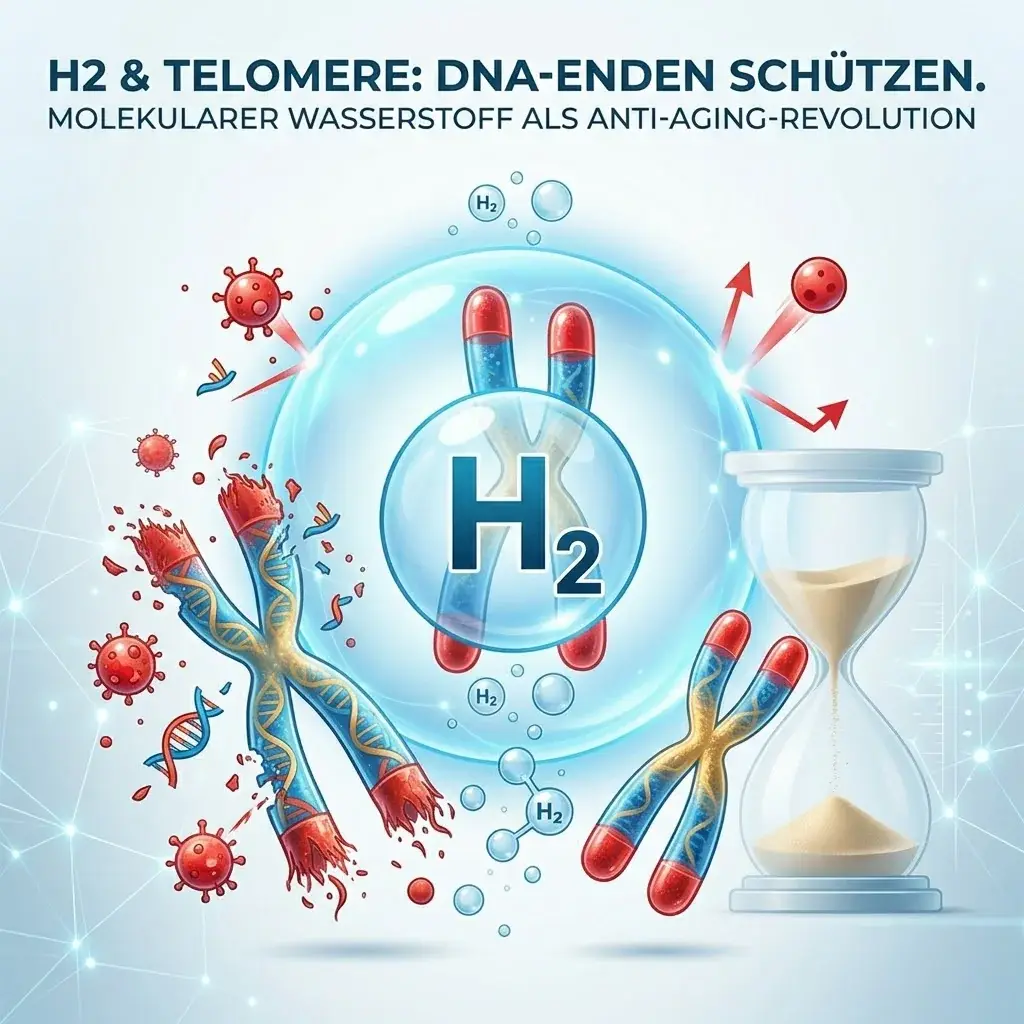
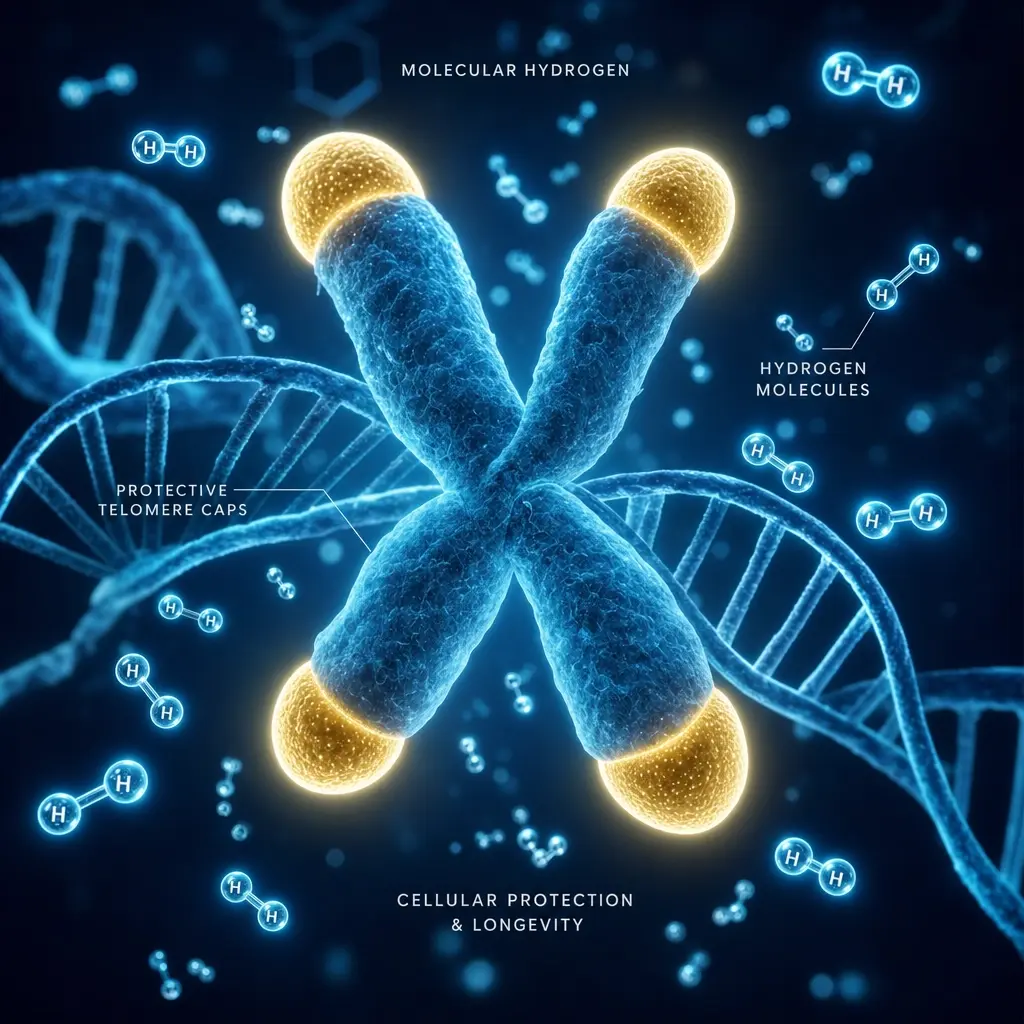
In modern research around well-aging and longevity, an increasingly fascinating question is coming into focus: How can we positively accompany the natural aging process at the cellular level? The answer is often sought at the very ends of our chromosomes, the so-called Telomeren.
In this report, you will learn why cells age and how H₂ can function as a cellular helper according to research.
What are telomeres (DNA ends) and why are they in focus?
To make the topic tangible, a simple metaphor helps: imagine your DNA strands like shoelaces. To prevent them from fraying, they have small protective caps at the ends. Telomeres perform exactly this function in our cells. They form the end caps of our chromosomes and are meant to protect the genetic information from being damaged during cell division.
The natural biological process
With every cell division, the DNA must be copied. However, through this process, a tiny piece of the telomere is naturally lost each time. Thus, telomeres shorten over the course of our lives all by themselves.
When they finally reach a critical minimum length (the so-called Hayflick-Limit), the cell can often no longer renew itself. It enters senescence (cellular aging). In science, telomere length is therefore frequently used as an important measure of our biological age.

An essential stress factor for cells: oxidative stress
While a certain shortening of DNA ends is a completely natural process, there are factors that can accelerate this development. One of the best-known triggers for this is oxidative stress.
This arises from an excess of so-called free radicals (reactive oxygen molecules) in the body. In everyday life, such overproduction is often favored by:
- Environmental influences, exhaust fumes and UV radiation
- Chronic stress and lack of sleep
- An unbalanced diet
- Persistent physical strain
When too many of these free radicals are present, they can strain cellular structures. To maintain itself and compensate for damage, the cell consumes resources, which in turn can lead to telomeres are worn down faster and shrink. This is exactly where researchers are starting with the approach of molecular hydrogen.
How H₂ can help slow telomere shortening
4 possible mechanisms by which molecular hydrogen can support cells and telomeres at the biological level.
H₂ can penetrate deep into the cell
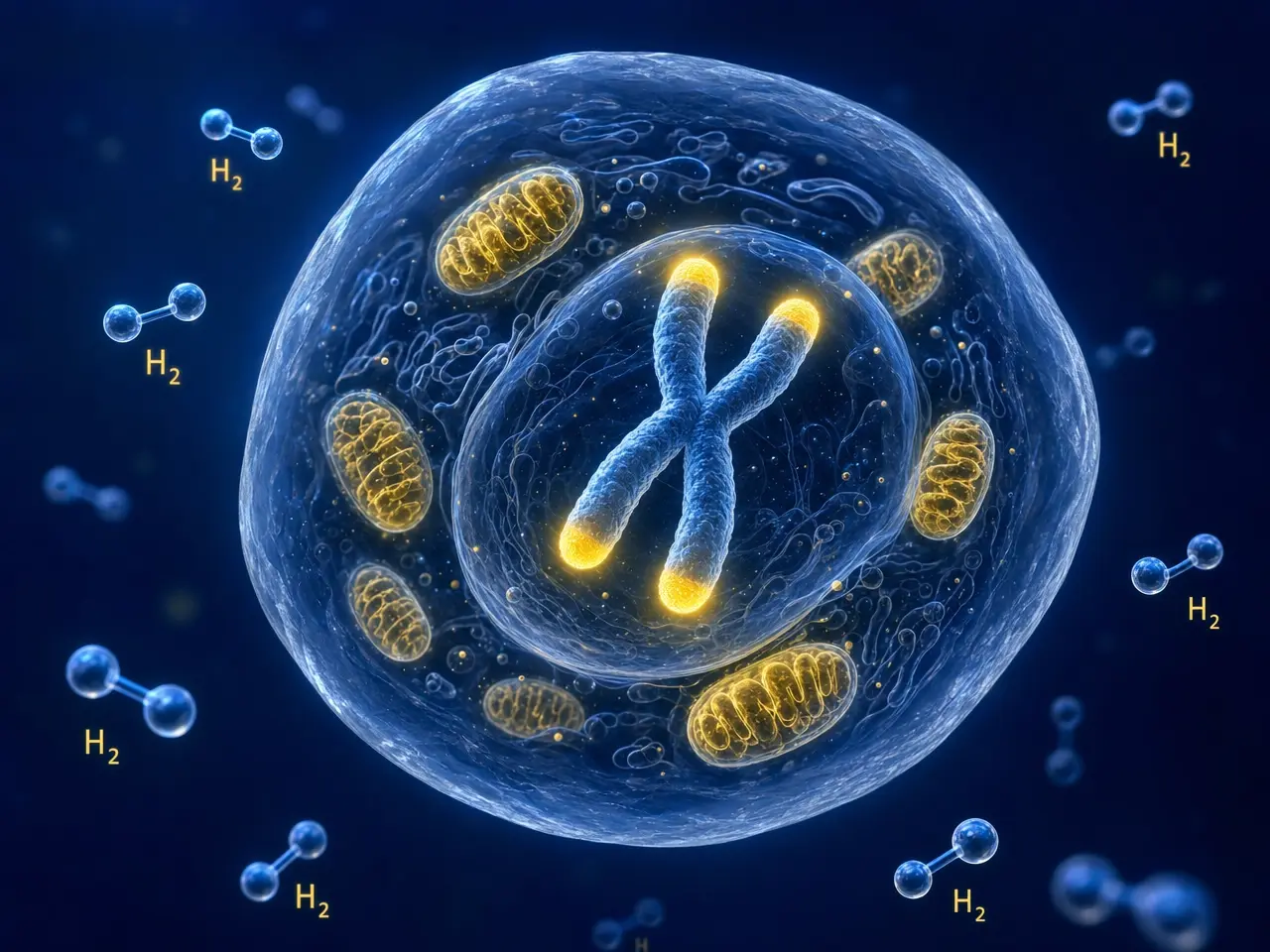
Many well-known antioxidants have a molecular size that makes it difficult for them to reach deep inside the cell. H₂, on the other hand, is so tiny that studies suggest it can pass through cell membranes effortlessly. It is believed to penetrate directly into the cell nucleus (nucleus) as well as the mitochondria — exactly where the telomeres are located and a balanced environment is crucial.
Possible selective neutralization of radicals
In research, H₂ is often described as a selective antioxidant. It is said to have the ability to interact preferentially with particularly reactive and cell-stressing free radicals (such as the hydroxyl radical). Important signaling molecules that the body needs for normal functioning are largely left untouched in the process.
Stimulation of the body's own cell protection programs (Nrf2 pathway)
Research suggests that H₂ can not only act directly but also function as an intelligent signaling molecule. It is discussed that it can activate the Nrf2 signaling pathway in cells. This mechanism can help the body produce more of its own powerful antioxidants such as glutathione.
Support of a balanced cellular environment
Molecular hydrogen is often attributed with harmonizing properties for the cellular environment. A calmed environment could lead to cells needing to divide less frequently out of turn. In addition, initial studies suggest that a low-oxidation environment could support the work of telomerase.
Accompanying effects: what caring for DNA ends can mean
Those who support their body in minimizing oxidative stress and creating a good cellular environment could benefit from various effects on overall well-being:
Support for skin appearance
When skin cells are exposed to less oxidative stress, this can have a positive effect on the natural renewal process and a fresher appearance.
Vitality in everyday life
Well-supplied and protected mitochondria can gently support the body's daily energy supply.
Slower aging
In longevity research, well-preserved telomere length is often associated with generally higher vitality and a potentially longer healthspan.
How can H₂ be integrated into everyday life?
The use of H₂ is enjoying growing popularity in the wellness and biohacking scene. Application is considered very well tolerated, as any excess gas is usually simply exhaled by the body. Popular methods are:
Drinking hydrogen-rich water (H₂ water)
Drinking water enriched with molecular hydrogen is the perfect daily routine to quickly and easily take advantage of the positive properties of hydrogen for yourself.
H₂ inhalation
Inhaling hydrogen gas via a special device is often used to supply the body with concentrated hydrogen during relaxation phases.
H₂ baths
External application through the skin can be used for cosmetic care and is often incorporated into holistic wellness routines.
Frequently Asked Questions (FAQ)
Telomeres are the protective caps at the ends of our chromosomes. They prevent genetic information from being damaged during each cell division. Over the course of life, they naturally shorten — their length is considered a measure of our biological age.
Free radicals attack cellular structures and force the cell to expend more resources on repair processes. This additional stress can wear down telomeres faster and accelerate their shortening — far beyond the natural rate.
Current research approaches suggest that H₂, as a selective antioxidant, can balance oxidative stress and penetrate into the cell nucleus. A reduced oxidation level could gently support natural telomere shortening and promote a balanced cellular environment.
H₂ is the smallest and lightest molecule in the universe. Due to its tiny size and electrical neutrality, it effortlessly passes through cell membranes and can penetrate directly into the mitochondria and the cell nucleus — exactly where the telomeres are located.
Cellular processes take time. Most users report noticeable well-being after a few weeks of regular consumption. For sustainable support at the cellular level, long-term daily integration into everyday life is recommended.
H₂ water is not a miracle cure, but a fascinating approach of modern well-aging research. It supports the body in counteracting oxidative stress and creating a good cellular environment — as part of a conscious, healthy lifestyle.
Conclusion: H₂ as possible support for your biological clock
The shortening of telomeres is an unavoidable, normal part of life. Nevertheless, we can help our body cope with everyday stresses as best as possible through a conscious lifestyle.
By helping to balance oxidative stress and penetrate into the cell nucleus according to current research, molecular hydrogen (H₂) offers a fascinating approach for modern well-aging. Anyone who wants to proactively and holistically support their well-being will find in H₂ an exciting, gentle possibility at the cellular level.

Experience the
AWAKE Effekt
AWAKE delivers 11+ PPM pure molecular hydrogen – directly into your drink.
- >11 PPM hydrogen concentration via nanobubble technology
- Without caffeine, without sugar, 100% pure
- In glass & can – no PET, maximum stability
- No chemical additives

Scientific Sources
The statements in this report are based on peer-reviewed, scientific publications:
- Ohsawa, I. et al. (2007). Hydrogen acts as a therapeutic antioxidant by selectively reducing cytotoxic oxygen radicals. Nature Medicine. View source
- von Zglinicki, T. (2002). Oxidative stress shortens telomeres. Trends in Biochemical Sciences. View source
- Ohta, S. (2014). Molecular hydrogen as a preventive and therapeutic medical gas: initiation, development and potential of hydrogen medicine. Pharmacology & Therapeutics. View source
- Ge, L. et al. (2017). Molecular hydrogen: a preventive and therapeutic medical gas for various diseases. Oncotarget. View source
- Molecular Hydrogen Institute. Independent scientific database on molecular hydrogen. Molecular Hydrogen Institute. View source
The information provided here is for general education and neutral information only. It does not constitute medical advice, diagnosis, or treatment recommendation. Hydrogen products are not medical devices and are not intended for the diagnosis, cure, or prevention of disease. Statements about the effects of H₂ are based on general observations and research. Please always consult a doctor or alternative practitioner for health questions or complaints.