
Hydrogen Booster vs. Ready-to-Drink Hydrogen Water: The Big Comparison
Buy a hydrogen booster or rely on ready-to-drink H₂ water? We compare the physical-chemical differences – soberly and scientifically sound.
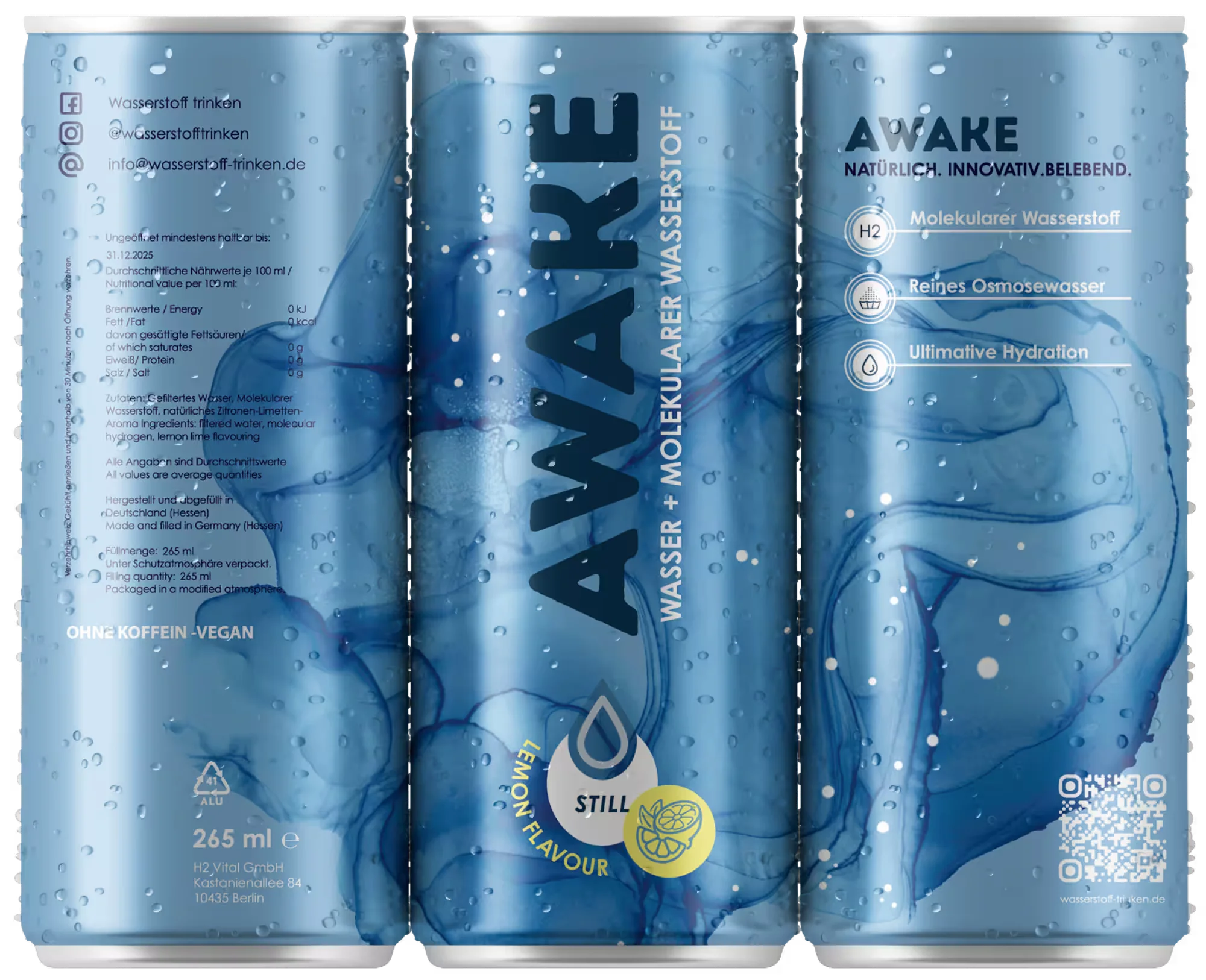
>11
PPM
0
Sugar
100%
Pure
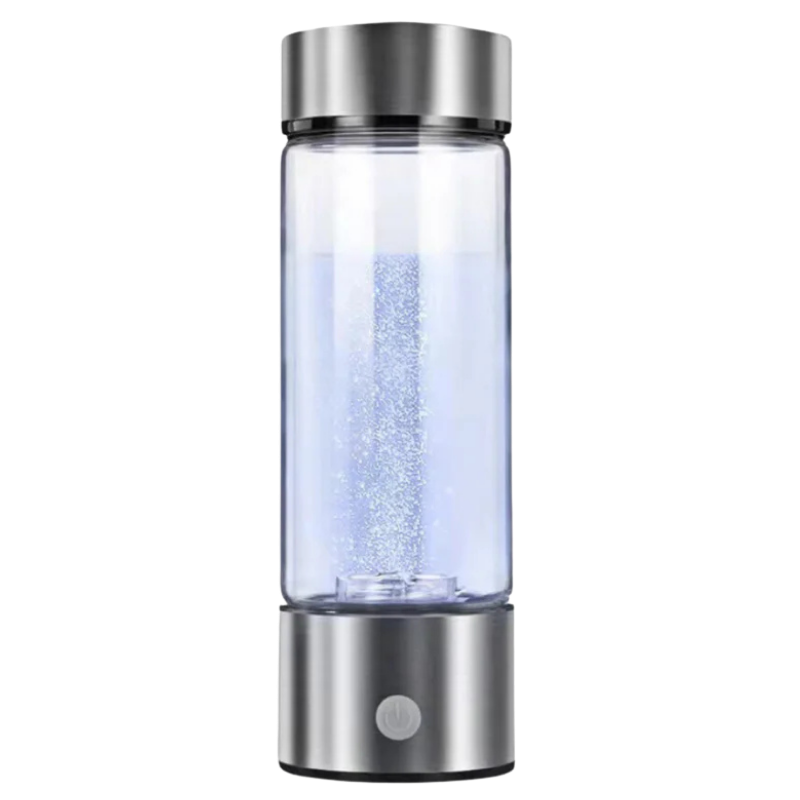
?
PPM
?
Caffeine
?
Pure
What is the difference between AWAKE and a hydrogen booster?
AWAKE is ready-to-drink hydrogen water with over 11 PPM molecular hydrogen, filled under pressure in a BPA-free can or special glass bottle. A hydrogen booster generates hydrogen via electrolysis directly from water and usually only reaches 0.5 – 3 PPM, which quickly escape after the brewing process.
The decisive difference lies in three factors: Concentration (AWAKE delivers a multiple of the PPM), Stability (overpressure keeps H₂ safely dissolved until opening), and Purity (no electrolysis residues like ozone, chlorine, or heavy metals).
Why molecular hydrogen?
Molecular hydrogen (H₂) is the smallest and lightest molecule in the universe. Since a groundbreaking study in 2007, H₂ has evolved from a chemical niche topic to an exciting subject of biomedical research. In the meantime, there are more than 3,000 publications worldwide investigating H₂ in preclinical and clinical contexts.
High Diffusion Capability
Due to its extremely small size, H₂ passively penetrates biological membranes, cell membranes, mitochondria, and potentially even the blood-brain barrier – without transporters, without detours.
Selective Antioxidant Properties
H₂ is described in the literature as a selective antioxidant. It preferentially reacts with particularly aggressive reactive oxygen species (ROS) such as the hydroxyl radical, but does not interfere with physiologically necessary signaling ROS.
Metabolic Neutrality
The only noteworthy reaction product is water. No bioactive byproducts are created – a decisive advantage over other antioxidant concepts.
Hydrogen Boosters & H₂ Generators: How They Work
A hydrogen booster (also called H₂ generator, hydrogen bottle, or electrolysis device) generates hydrogen directly from drinking water. Electrodes conduct an electric current through the water (electrolysis) and H₂O is split into hydrogen (H₂) and oxygen (O₂). High-quality devices use a PEM membrane to separate the gases and direct only the hydrogen into the drinking water.
Sounds promising – but anyone who wants to produce hydrogen water themselves quickly encounters physical limits set by Henry's Law.
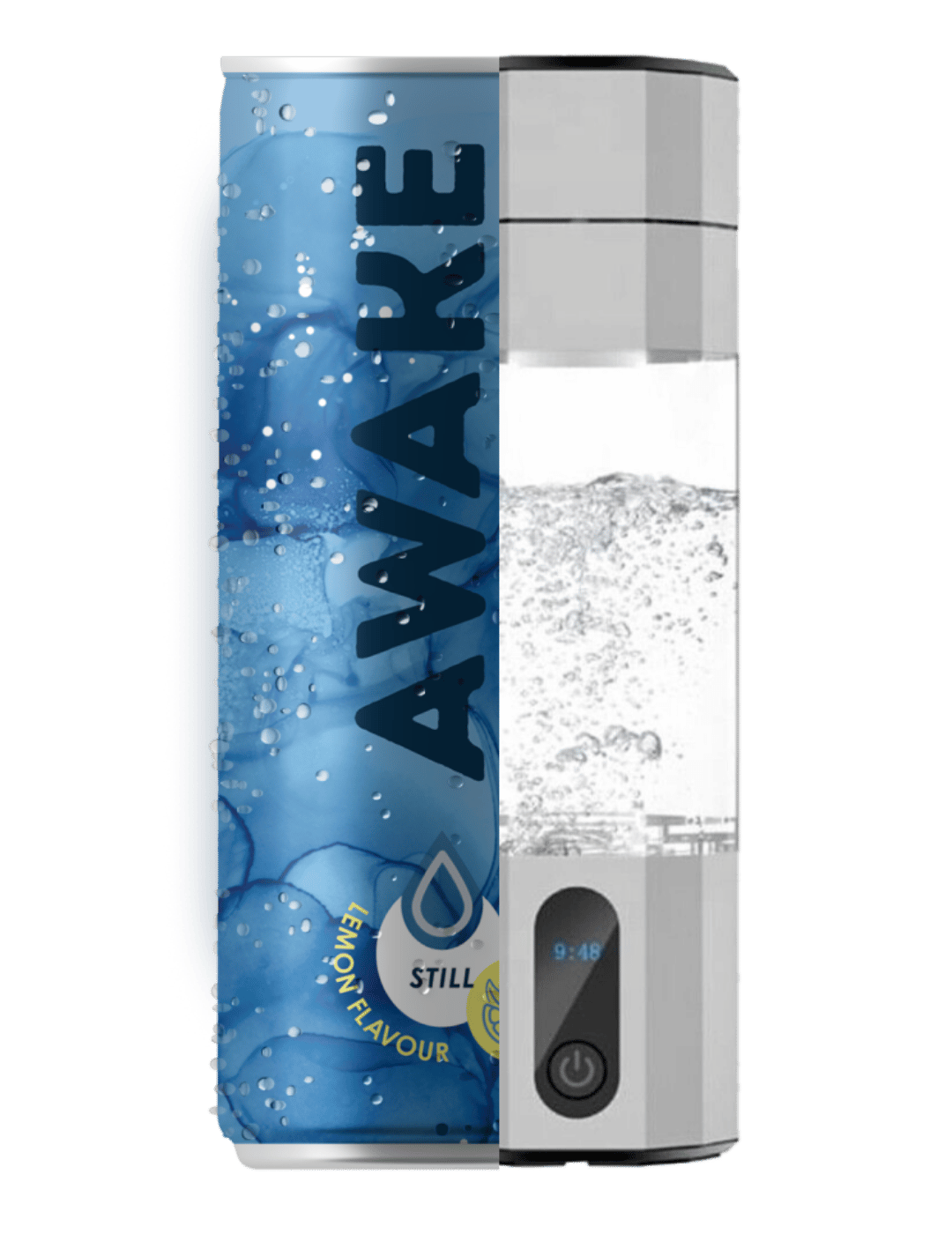
The Physical Limits of Electrolysis
Anyone who wants to produce hydrogen water themselves quickly encounters physical limits set by Henry's Law: The concentration of a dissolved gas in water is directly proportional to its partial pressure.
At normal pressure (1 atm) and room temperature, the saturation limit of hydrogen in water is about 1.6 mg/L. Without increased pressure, hydrogen boosters can hardly exceed this limit – a multiple of that is only possible through pressure filling.
Maximum theoretical H₂ concentration in water at atmospheric pressure and room temperature.
Practically achievable values of commercial boosters – often only through short-term oversaturation.
Through enormous partial pressure and nanobubble technology, the physical limit is massively exceeded.
What Makes Hydrogen Boosters Problematic in Practice
A precise H₂ water booster comparison reveals several weaknesses that users should know before investing in an electrolysis device.
Gas Volatility & Fluctuating PPM Values
Hydrogen diffuses extremely quickly. Since boosters cannot generate overpressure, the gas escapes immediately after production. Advertised peak PPM values usually refer to measurements directly after electrolysis – by the time you drink, the concentration has often already dropped significantly.
Risk of Byproducts in Cheap Devices
Inexpensive devices without a high-quality PEM membrane do not cleanly separate the gases. There is a risk that ozone, chlorine gas, or even heavy metals from inferior titanium plates can get into the drinking water – a clear safety risk.
Maintenance, Wear & Limited Mobility
Electrodes and membranes age. Without regular cleaning and descaling, H₂ yield drops drastically – often without the user noticing. In addition: devices require electricity and are practically unusable on the go, during sports, or while traveling.
AWAKE: Nanobubbles + Pressure Filling
To overcome the physical limitations of classical boosters, AWAKE relies on a completely different process: industrially produced hydrogen water combines nanobubble technology with pressure filling in diffusion-tight containers.

Pressure Filling: Over 11 PPM Through Enormous Partial Pressure
By applying enormous partial pressure in a closed enrichment process, H₂ concentrations can be achieved that would be physically impossible under normal pressure. AWAKE breaks through the saturation limit of Henry's Law and delivers over 11 PPM of molecular hydrogen – a multiple of what commercial hydrogen boosters can achieve.
Nanobubble Technology: Maximum Surface Area, Stable Solution
Nanobubble technology creates tiny gas bubbles that massively increase the surface area of hydrogen in water. This keeps H₂ stably bound in solution instead of immediately degassing again – a decisive difference from error-prone electrolysis devices.
Diffusion-Tight Packaging: BPA-Free Can or Glass Bottle
Hydrogen diffuses through virtually every polymer faster than any other gas. PET is therefore unsuitable. AWAKE is filled exclusively in 100% BPA-free aluminum cans or glass bottles – diffusion-tight and with overpressure that keeps the ppm concentration stable until opening.
Purity & Bioavailability: What It Says on the Label Reaches Your Body
AWAKE contains only what belongs in it: purest water and pure molecular hydrogen. No electrolysis residues, no ozone risk, no heavy metals. Thanks to its extremely small size, H₂ can passively penetrate cell membranes, mitochondria, and even the blood-brain barrier.
AWAKE vs. Hydrogen Booster: A Direct Comparison of Criteria
AWAKE
Over 11 ppm – through pressure & nanobubble technology.
Comparison
Mostly 0.5 – 3 ppm (physically limited by Henry's Law).
AWAKE
Stable until opening – overpressure reliably maintains the ppm.
Comparison
Escapes immediately after production – water must be consumed right away.
AWAKE
100% pure, no electrolysis residues, no ozone, no heavy metals.
Comparison
Risk of ozone, chlorine gas, or heavy metals in cheap devices.
AWAKE
Ready to drink immediately – open & drink.
Comparison
Waiting time for electrolysis, regular cleaning and descaling needed.
AWAKE
Perfect for on the go, office, sports, and travel.
Comparison
More suited for home use – requires electricity & maintenance.
AWAKE
Diffusion-tight BPA-free aluminum can or special glass.
Comparison
Mostly plastic or simple glass containers without overpressure.
What our customers say
Over 3,000+ satisfied customers already trust the power of AWAKE.
“Since I've been drinking AWAKE regularly, it has become a firm part of my daily routine and I feel very comfortable with it in everyday life.”
Sarah M.
“I deal with health topics professionally and find the approach behind molecular hydrogen really exciting. Above all, the high H₂ concentration made me curious.”
Dr. Martin B.
“I've wanted to find something that integrates easily into everyday life for a long time. Meanwhile, several people at our home drink AWAKE regularly.”
Lisa W.
“My training volume has improved. Not in an unnatural way, but a sustainable increase in performance. Recovery after sports has become significantly better.”
Michael R.
“Tastes pleasant and is simply practical for on the go. I usually always have a few cans in the car or in my bag.”
Henrik P.
“Since I've been drinking AWAKE regularly, it has become a firm part of my daily routine and I feel very comfortable with it in everyday life.”
Sarah M.
“I deal with health topics professionally and find the approach behind molecular hydrogen really exciting. Above all, the high H₂ concentration made me curious.”
Dr. Martin B.
“The only drink that makes me noticeably feel better – and daily. I started about two months ago and have definitely noticed an increase in energy and focus. It also tastes great. I've already recommended it to several friends and can't wait to try the glass bottle next!”
Thomas K.
“I've been drinking AWAKE regularly for several months now. Especially in stressful everyday life, I automatically reach for it.”
Anna S.
“I've wanted to find something that integrates easily into everyday life for a long time. Meanwhile, several people at our home drink AWAKE regularly.”
Lisa W.
“My training volume has improved. Not in an unnatural way, but a sustainable increase in performance. Recovery after sports has become significantly better.”
Michael R.
“Tastes pleasant and is simply practical for on the go. I usually always have a few cans in the car or in my bag.”
Henrik P.
“I've been drinking AWAKE for 60 days now and am really satisfied with the results. The taste is great, the quality feels premium, and the balance is perfect for daily use. What really stands out is the customer service.”
Julia F.
Frequently Asked Questions About the Hydrogen Water Comparison
Everything you need to know about AWAKE, hydrogen boosters, and the physical limits of electrolysis – answered compactly.
The decisive difference lies in concentration, stability, and purity. AWAKE is ready-to-drink H₂ water with over 11 ppm molecular hydrogen, produced through pressure filling and nanobubble technology. A hydrogen booster generates hydrogen via electrolysis, usually only achieving 0.5 to 3 ppm – physically limited by Henry's Law.
Henry's Law states: The concentration of a dissolved gas in water is directly proportional to its partial pressure. At normal pressure (1 atm), the saturation limit of H₂ in water is about 1.6 mg/L. Without increased pressure, hydrogen boosters can hardly exceed this physical limit. AWAKE uses enormous partial pressure in the filling process and breaks through this limit.
Commercial hydrogen boosters usually achieve only 0.5 to 3 ppm. Higher peak values are often only possible short-term through oversaturation or nanobubbles, which quickly degas again. AWAKE consistently delivers over 11 ppm – stable until the can is opened.
Yes, especially inexpensive devices without a high-quality PEM membrane (Proton Exchange Membrane) do not cleanly separate the gases produced during electrolysis. This allows ozone, chlorine gas, or even heavy metals from inferior titanium plates to enter the drinking water.
Hydrogen diffuses through virtually every polymer faster than any other gas. PET bottles are completely unsuitable for storing H₂ water. AWAKE is filled in 100% BPA-free aluminum cans or glass bottles – both materials are diffusion-tight and maintain the overpressure, keeping hydrogen safely in the water.
Nanobubble technology creates tiny gas bubbles that massively increase the surface area of hydrogen in water. This keeps H₂ more stably bound in solution and does not immediately escape again when the can is opened. Combined with pressure filling, it is the key to over 11 ppm.
Yes, AWAKE is fully ready-to-drink. Thanks to the overpressure, the hydrogen remains stably enclosed until opening. We recommend consuming it within 30 minutes of opening so you absorb the full ppm concentration.
The scientific basis is growing continuously. More than 3,000 publications deal with molecular hydrogen. A groundbreaking study was Ohsawa et al. (2007) in Nature Medicine. Due to its extremely small size, H₂ passively penetrates cell membranes, mitochondria, and potentially even the blood-brain barrier.
High-quality PEM electrolysis devices can be an option for very high daily needs at home. But the disadvantages remain: physically limited concentration, rapid gas loss, maintenance effort, and limited mobility. For maximum concentration, guaranteed purity, and highest everyday suitability, pressure-filled AWAKE is the superior solution.
AWAKE is available directly through the online shop – as a can with natural lemon-lime flavor or as a special glass bottle with pure H₂ water. We deliver within Germany.
Experience the
AWAKE Effect
AWAKE – the hydrogen drink with >11 PPM, no caffeine, no sugar.
- >11 PPM hydrogen concentration via nanobubble technology
- No caffeine, no sugar, 100% pure
- In glass & can – no PET, maximum stability
- No chemical residues, no additives
Scientific Basis
All statements about the effect of molecular hydrogen in this comparison are based on peer-reviewed research and serious review articles.
Ohsawa I. et al. (2007). Hydrogen acts as a therapeutic antioxidant by selectively reducing cytotoxic oxygen radicals. Nature Medicine
View SourceZentrum der Gesundheit. Wasserstoffreiches Wasser: Der neue Wundertrank? zentrum-der-gesundheit.de
View SourceLeBaron T. W. et al. Übersichtsarbeiten zur Bioverfügbarkeit von molekularem Wasserstoff. Peer-reviewed Literature
Note: The statements about the effect of molecular hydrogen are based on current, promising scientific research. However, H₂ is not a medicinal product. The state of research is not yet conclusive and no healing promises can be derived.